


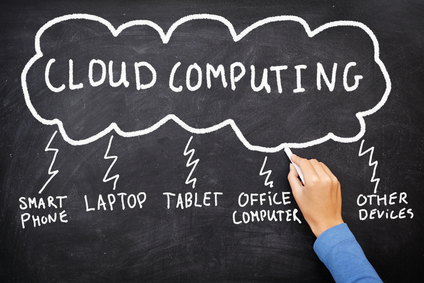
Cloud computing is using the Internet to deliver hardware and software services instead of keeping physical hardware and software at your office. Companies are shifting to cloud computing now more than ever for six main reasons. It is hard to ignore the benefits of the cloud as a viable, essential computing option, but do the benefits outweigh the risks? Take a look at the following six reasons that companies choose to move to a cloud computing environment:
- Maintaining Focus on the Business: Businesses realize that running an IT department is not their core competency; they are better lawyers, doctors, or suppliers. Buying cloud services, either in the form of managed cloud services or within a VDI solutions environment, their entire datacenter is often more cost-effective, more reliable. It lets them reallocate their limited resources to growing their business.
- Business Agility: Businesses with significant technology investments can find themselves unable to take advantage of shifts in the market or respond to competitive pressures because the capital, people, or time are not available in the measure needed to react. Cloud services remove these barriers, allowing businesses to continually adapt their technology needs to their business without the costs that would typically have to be considered with an onsite data center.
- Reduced Capital Expenditures: Large capital investments can be minimized or eliminated in favor of small monthly payments. Capital can be protected as keeping capital and operational expenses to a minimum can be very important to small and medium businesses alike.
- Scale: Businesses that have peak seasons or different seasonal staffing demands can benefit from cloud services by letting them temporarily dial-up more capacity for the seasonal business peaks, without purchasing the hardware or software that would otherwise go unused during the slower times of the year.
- Access from Anywhere: Being able to do Business without Borders™ is one of the significant benefits of cloud services. Access to your applications and data is available to authorized users anywhere there is Internet access.
- Staffing Efficiency: Cloud services can help you maintain an efficient technology staff, outsourcing key technical specializations or technology staff as it makes sense for your business.
Are there different types of clouds? How do you know what to pick?
Yes, there are three primary types of clouds:
Public Clouds: A public cloud is one in which the services and infrastructure are provided offsite over the Internet. These clouds offer the most outstanding efficiency level in shared resources; however, they are also more vulnerable than private clouds. According to a popular cloud computing cheat sheet, a public cloud is an obvious choice when:
- Your standardized workload for applications is used by lots of people, such as email.
- You need to test and develop application code.
- You have SaaS (Software as a Service) applications from a vendor who has a well-implemented security strategy.
- You need incremental capacity (the ability to add computer capacity for peak times).
- You’re doing collaboration projects.
- You’re doing an ad-hoc software development project using a Platform as a Service (PaaS) offering cloud.”
For companies more concerned about security and privacy, a public cloud’s cost savings and flexibility may not be a sufficient reason to move to the cloud. For those customers, there are two additional cloud options.
Private Clouds: Private clouds offer increased security and added levels of control that are not available with public cloud offerings as each private cloud is built exclusively for one organization and can be located onsite or, more typically, offsite.
Hybrid Clouds: Often, organizations select hybrid cloud models that let them take advantage of the cost-saving utility-like pricing of public clouds. For example, they can leverage the cloud for the company website and other digital assets, but they maintain a private cloud for applications and content subject to regulatory guidelines or confidentiality.
-
-
- Industry-specific compliance laws
- Location Security for Data Centers
- Infrastructure, Storage, & Auditing Solutions
-
 With the movement toward remote work and mobile workforces, many organizations are investing in managed cloud services to remain competitive. Instead of hiring specialized technology staff as the business grows or expands into new markets, cloud computing gives businesses a reason to invest in and outsource the technology – and the staff to go with it.


